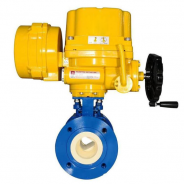
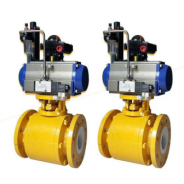
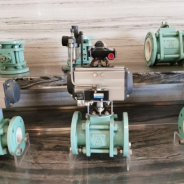
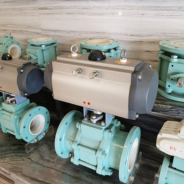
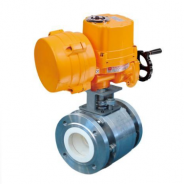
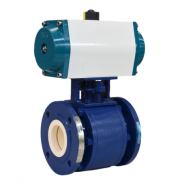
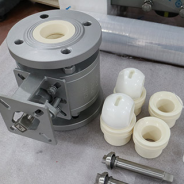
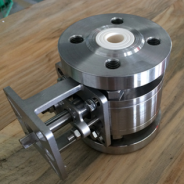
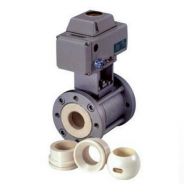
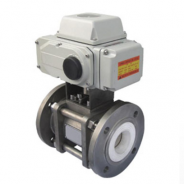
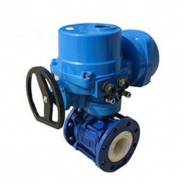
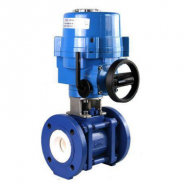
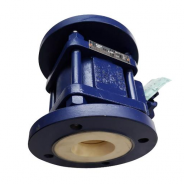
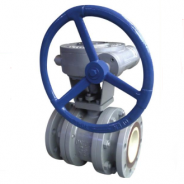
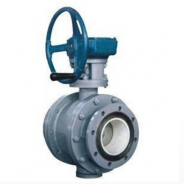
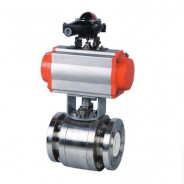
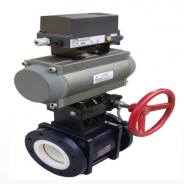
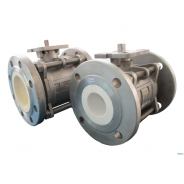
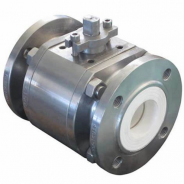
Ceramic lined ball valve
Ceramic lined ball valve introduction
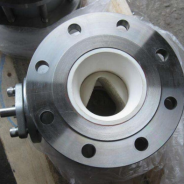
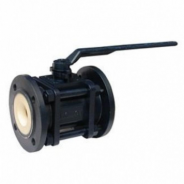
Ceramic lined ball valve is fully lined with ceramic body and medium contact parts (including ball and body lining) are adopted high-performance structural ceramic materials, which is used in thermal power plant desulfurization and denitrification, fly ash removal, chemical metallurgy, polycrystalline silicon powder transport and other high corrosion, high wear, high impact.
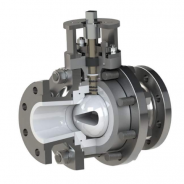
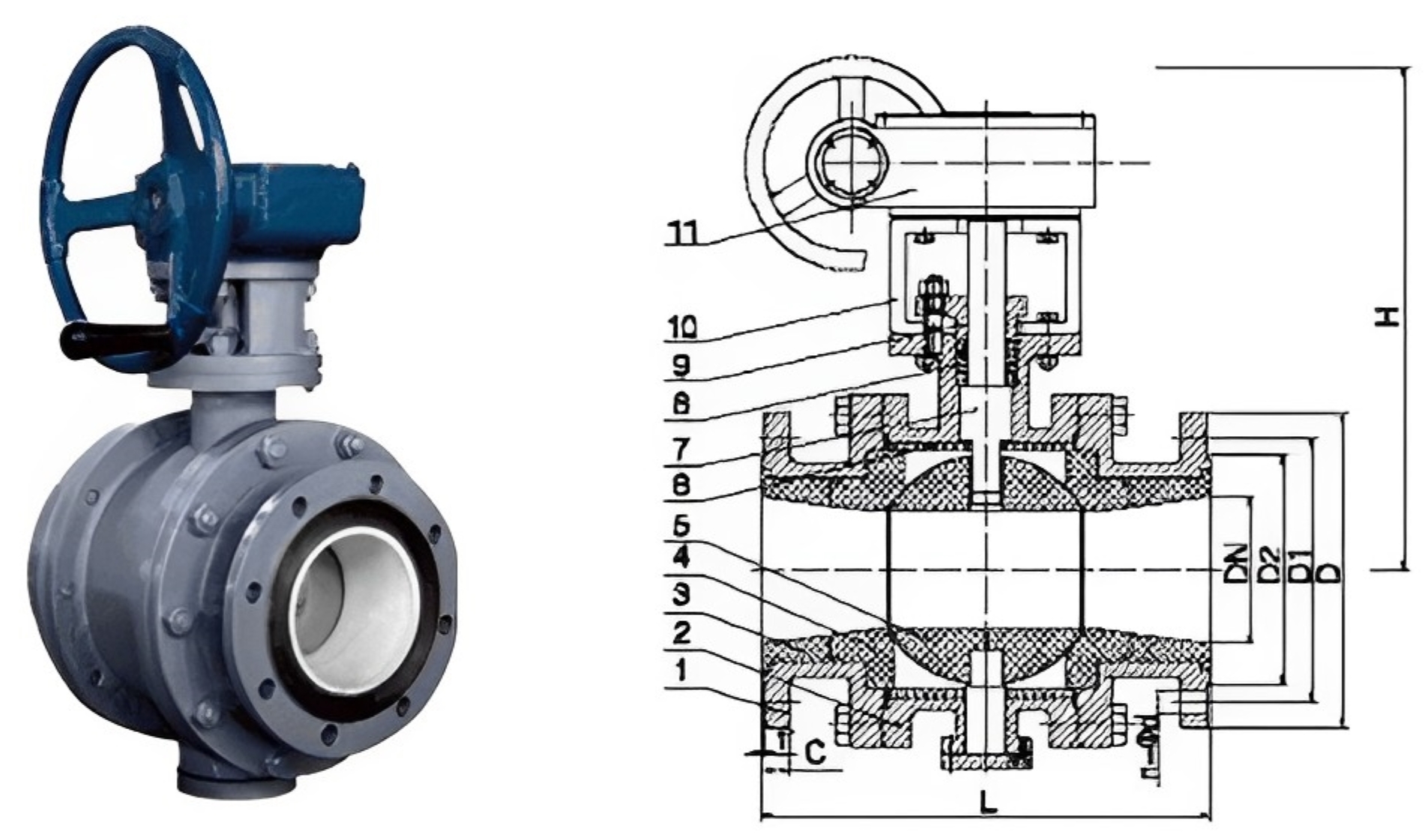
Ceramic lined ball valve body is made of carbon steel or stainless steel with three-stage structure design, which is simple and reliable in structure and can protect the internal ceramic parts from damage. The ceramic lined ball valve ball and all parts in contact with the medium are lined with structural ceramic materials, high purity alumina ceramics and zirconia ceramics have corrosion resistance, in addition to the hydrogen acid in most of the strong corrosion of acid and base medium will not be corroded, as a corrosion resistant valve, in many corrosion resistant fields. High purity alumina ceramics and toughened zirconia ceramics in addition to corrosion resistance, the same hardness (rockwell hardness HRA>88, second only to diamond and a few other materials), so there are solid particles in various.
The ceramic ball valve is a high-performance industrial pipeline control valve developed based on advanced ceramic material technology. As an upgraded iteration of traditional metal ball valves, it is specially designed for severe industrial working conditions featuring
strong corrosion, high wear, particle-laden media, high temperature and high pressure. Breaking the limitations of traditional valves that rely on metal materials for pressure bearing and sealing, this valve replaces all core medium-contacting components with high-performance structural ceramics. Ceramic lined ball valvefundamentally solves the common pain points of ordinary metal valves, including easy wear and corrosion, high leakage rate, short service life, and frequent maintenance and replacement. Currently, it has become a core control device for pipeline systems under harsh working conditions in petroleum chemical, power desulfurization, mining and metallurgy, environmental protection and papermaking industries, serving as a key supporting product for intelligent and long-term industrial fluid management.
As a high-end upgraded product in the industrial valve industry, ceramic ball valve accurately overcome various application shortcomings of traditional valves under harsh working conditions with six core characteristics: high wear resistance, strong corrosion resistance, zero leakage, high and low temperature resistance, long service life and low operation and maintenance. It not only solves the industrial problems of easy damage, leakage and frequent replacement of valves in industrial fluid control, but also effectively improves the operation stability, continuity and safety of industrial pipeline systems, and greatly reduces enterprise equipment operation and maintenance costs, shutdown losses and potential safety hazards.
With the upgrading of industrial production towards refinement, intelligence and long-term operation, the demand for control under harsh working conditions continues to grow. Ceramic ball valve has gradually replaced traditional metal valves, rubber-lined and fluorine-lined valves, becoming the preferred fluid control equipment in high-end industrial fields such as electric power, chemical industry, mining, environmental protection and new energy, with high market application value and promotion prospects.
Nominal size: DN15-DN300(1/2"-12")
Nominal pressure: PN6-PN100
Applicable temperature: -29~+230℃
Body material: Carbon steel (WCB,A105), stainless steel (CF8,CF8M,F304,F316), etc
Ball material: structural ceramics
Seat material: Structural ceramics
Packing material: Flexible graphite, PTFE
Operation mode: electric (ordinary type, explosion-proof type, switch type, intelligent control type, etc.)
Suitable medium: limestone water, gypsum slurry, silica powder, coal ash and other high corrosion, high wear, high erosion medium
Ceramic lined ball valve design feature
1. Ceramic lined ball valve ball, seat, bushing and other components in contact with the medium are made of ceramic materials, its high chemical stability and high hardness (HRA88 above) characteristics, greatly improve the wear resistance, corrosion resistance, prolong the service life of the valve.
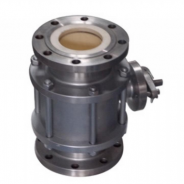
2. The ceramic lined ball valve body is designed for three-section structure, which is firm and easy to maintain.The valve structure is simple, the flow passage is smooth, the medium flow resistance is small.
3. The ceramic lined lined ball valve seat is built in cushioning compensation elastic gasket to ensure a stable and good sealing, and in the containing impurity, can avoid the ball to lock.
4. High machining accuracy of contact surface of valve ball and seat surface, smooth and clean, so that the valve torque is light and the sealing performance reaches zero leakage.
5. The use of ceramic lined ball valve can greatly reduce the number of valve maintenance and replacement, improve the safety and stability of supporting equipment operation system, save equipment repair costs.
Ceramic lined ball valve Working Principle
Belonging to the cut-off and regulating valve category, the ceramic ball valve inherits the floating and fixed ball structure of conventional ball valves. Its working principle is consistent with ordinary ball valves: the driving device drives the valve stem to rotate the internal ceramic ball by 90 degrees. By aligning or misaligning the ball through-hole with the pipeline channel, the valve realizes the cut-off, throttling and flow regulation of fluid media, and can accurately control the conveying state of liquid, gas and solid-liquid mixed slurry in pipelines.
Its core differentiated advantage lies in the full medium-contact ceramic design. All internal parts in contact with fluid, including the ball, valve seat, inner liner and throttling parts, are made of high-performance industrial structural ceramics. The metal outer valve body only undertakes pressure bearing, fixing and protection functions without contacting corrosive and abrasive media. This fundamentally avoids the performance shortcomings of metal materials and greatly improves the overall working condition adaptability and service life of the valve.
Ceramic lined ball valve performance
1. All parts in contact with the medium are structural ceramics with extremely high chemical stability and hardness (Rockwell hardness HRC90), second only to diamond.Therefore, the ceramic ball valve has very high wear resistance, corrosion resistance, erosion resistance performance, and good insulation, small thermal expansion.
2. The ball of ceramic lined ball valve is manufactured by advanced grinding equipment and technology, with high roundness precision and good surface quality. After grinding against the seat, the Zr02 ceramics can be used to achieve good sealing performance.
3. Ceramic lined ball valve completely changed the disadvantages of metal hard sealed ball valve, such as easy leakage, large torque and non-corrosion resistance of sealing surface.
4. Good wear resistance of ceramics makes the ceramic ball valve durable and highly reliable, with a long service life, 2-4 times that of titanium alloy valve and Monel valve.
5. Used in high hardness granular medium, or medium with soft particles but corrosion, this ceramic ball valve has incomparable absolute advantage, and is the only valve suitable for this kind of medium.
Ceramic lined ball valve Performance Advantages
Compared with traditional stainless steel, carbon steel and fluorine-lined ball valves, ceramic ball valves have outstanding comprehensive performance under harsh working conditions, completely solving various application pain points of traditional valves. Its core advantages are reflected in five major dimensions.
1 Ultra-high Wear Resistance and Super Long Service Life
Relying on ultra-high hardness ceramic materials, the ceramic lined ball valve can resist long-term high-speed scouring and wear of hard particles such as coal powder, mineral slurry, gypsum slurry, quartz sand and dust, avoiding metal wear, scratching and jamming. Under high-wear working conditions, the service life of ceramic ball valves is 10-20 times that of stainless steel valves and 5-10 times that of fluorine-lined valves, greatly reducing valve replacement frequency.
2 Full-range Corrosion Resistance for Complex Media
Structural ceramics have extremely stable chemical properties, resisting erosion from strong acids, strong alkalis, salt solutions, organic solvents, corrosive flue gas and other media without rusting, corrosion, perforation or aging failure. It can stably transport strong corrosive media such as hydrochloric acid, sulfuric acid, caustic soda, desulfurization slurry and chemical waste liquid, perfectly solving the problems of corrosion and leakage of metal valves and aging damage of fluorine-lined valves.
3 Zero-leakage Sealing and High Control Accuracy
The ceramic sealing surface of ceramic lined ball valve is precisely paired and polished with high flatness and fitting degree. Cooperated with an auxiliary flexible sealing structure, it achieves hard-seal zero leakage after full closing. Ceramic lined ball valve not only meets the pipeline cut-off sealing requirements, but also realizes precise regulation of medium flow and pressure with no medium leakage, eliminating medium waste and potential safety hazards. In addition, the ceramic sealing surface is wear-resistant and non-deformable, with no attenuation of sealing performance after long-term operation, solving the problem of sealing failure and excessive leakage of ordinary valves after long-term use.
4 Wide Working Condition Adaptability with High Temperature and Pressure Resistance
Ceramic materials have excellent thermal stability and ultra-low thermal expansion coefficient, avoiding deformation, cracking and softening at high temperatures, and can operate stably for a long time in a wide temperature range of -40℃ to 450℃. The ceramic lined ball valve body adopts high-strength carbon steel or stainless steel shell with excellent pressure resistance, adapting to medium and high-pressure pipeline systems with a pressure range of 0.6MPa to 16MPa, covering low-temperature, normal-temperature, high-temperature and high-pressure complex working conditions. Meanwhile, the material has good thermal insulation performance, reducing heat loss of high-temperature media.
5 Low Operation and Maintenance Cost with High Comprehensive Cost Performance
Ceramic ball valve have stable structure and extremely low failure rate, with no rusting, wear failure or jamming faults. They rarely require frequent maintenance and part replacement after installation, greatly reducing manual maintenance costs, accessory replacement costs and pipeline shutdown losses. Although the one-time procurement cost is slightly higher than that of ordinary metal valves, its ultra-long service life and extremely low maintenance cost bring far higher long-term comprehensive cost performance than traditional valves. In addition, ceramic materials are non-toxic, tasteless and pollution-free, and will not react with media to generate impurities, ensuring medium purity and adapting to high-quality medium transportation scenarios such as fine chemical industry and environmental protection water purification.
Ceramic lined ball valve full classificatin
1. Classified by Ball Support Structure
1.1 Floating Ceramic lined Ball Valve
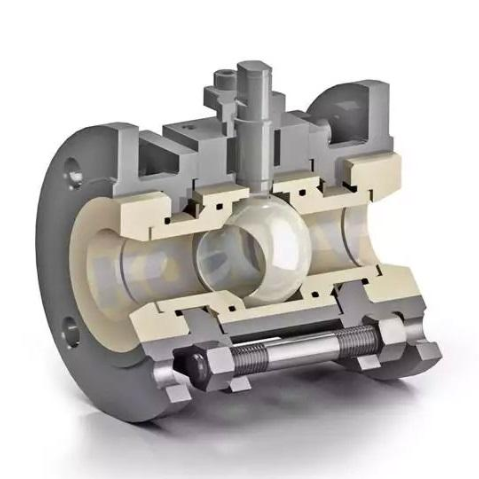
The ceramic ball has no upper and lower supporting trunnions and is only clamped by front and rear ceramic seats. Medium pressure pushes the ball tightly against the outlet seat to form sealing.
-
Advantages: Simple structure, low manufacturing cost, compact size, easy disassembly and maintenance
-
Application: Medium & small sizes DN15~DN100, medium-low pressure PN0.6~PN16, smooth flow media with slight particles
-
Limitation: Large operating torque under high pressure, not suitable for large-bore and high-pressure pipelines
1.2 Trunnion-Mounted Ceramic Ball Valve
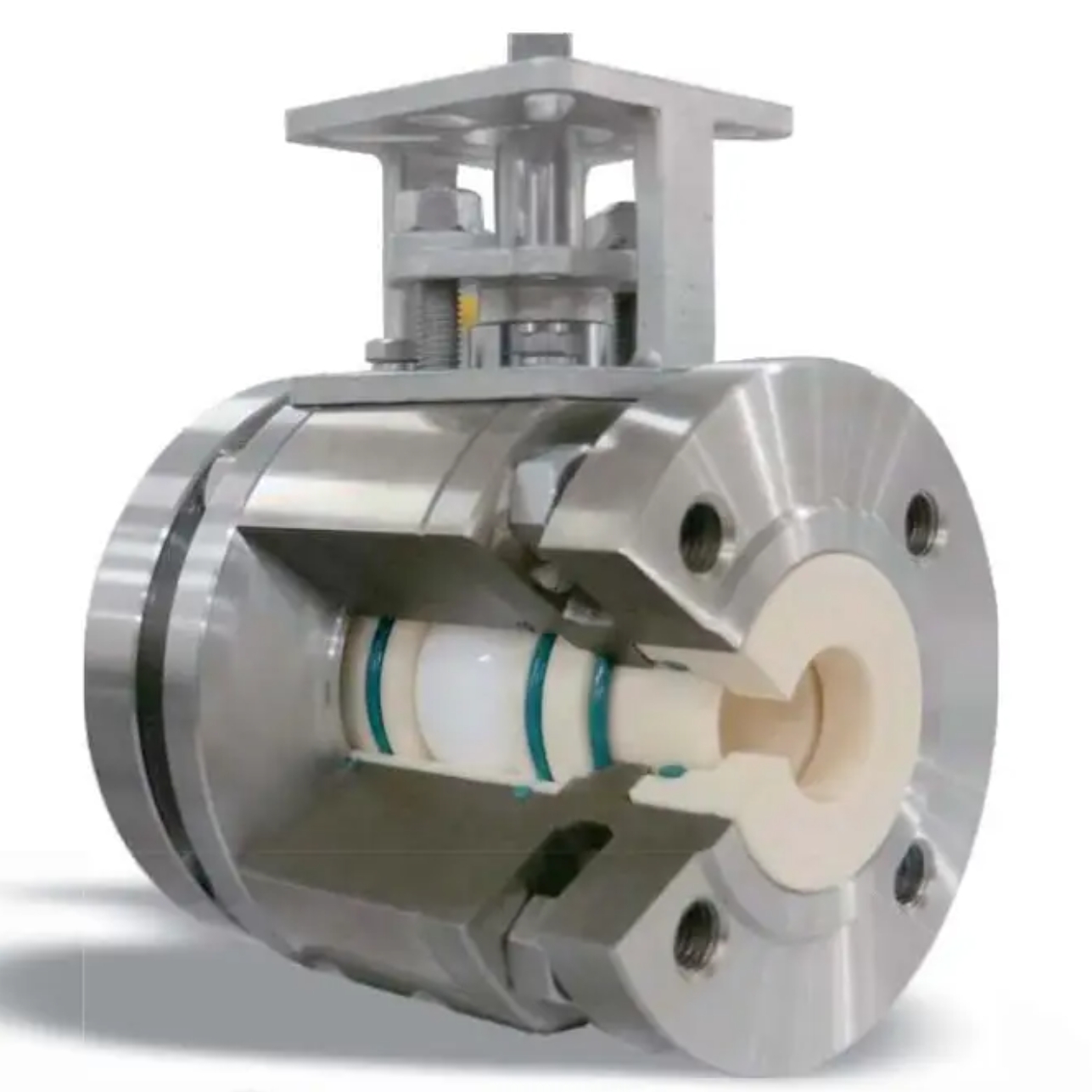
The ceramic ball is equipped with upper and lower ceramic support trunnions to bear medium thrust, preventing ball offset and greatly reducing sealing friction torque.
-
Advantages: Small opening/closing torque, excellent impact resistance, stable operation, ultra-long service life for continuous automatic running
-
Application: Large bore DN125 and above, Class150/300 high pressure, high-concentration slurry and high-flow particle-laden media
2. Classified by Flow Path Function
2.1 2-Way Straight Ceramic Ball Valve
The ball is machined with standard circular through hole for pipeline cut-off only, divided into full port and reduced port types.
-
Full port: Consistent inner diameter between ball passage and pipeline, minimum pressure loss, ideal for large-flow slurry transportation
-
Reduced port: Narrower ball flow channel, lighter valve body, widely used in small-flow auxiliary pipelines
2.2 V-Port Ceramic Lined Ball Valve
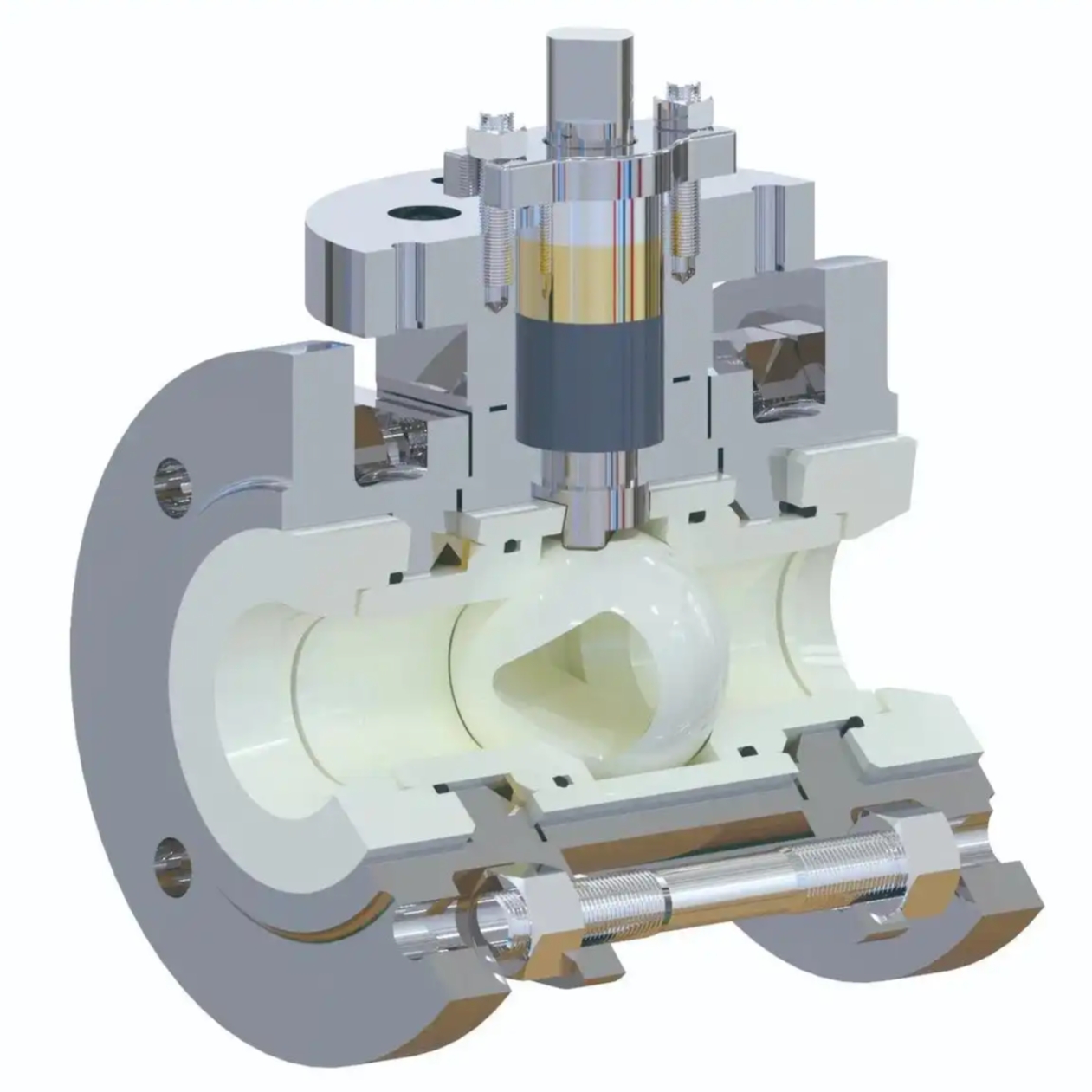
The ball is designed with V-shaped notch, presenting equal percentage flow characteristics to realize stepless precise flow regulation from 0° to 90°.
-
Unique strengths: The shear edge formed by V-notch and ceramic seat can cut fibers, crystals and fine particles to avoid material adhesion and jamming, achieving zero leakage at full close position
-
Application: Desulfurization slurry, lithium battery slurry, paper pulp, proportional regulation of chemical ingredients
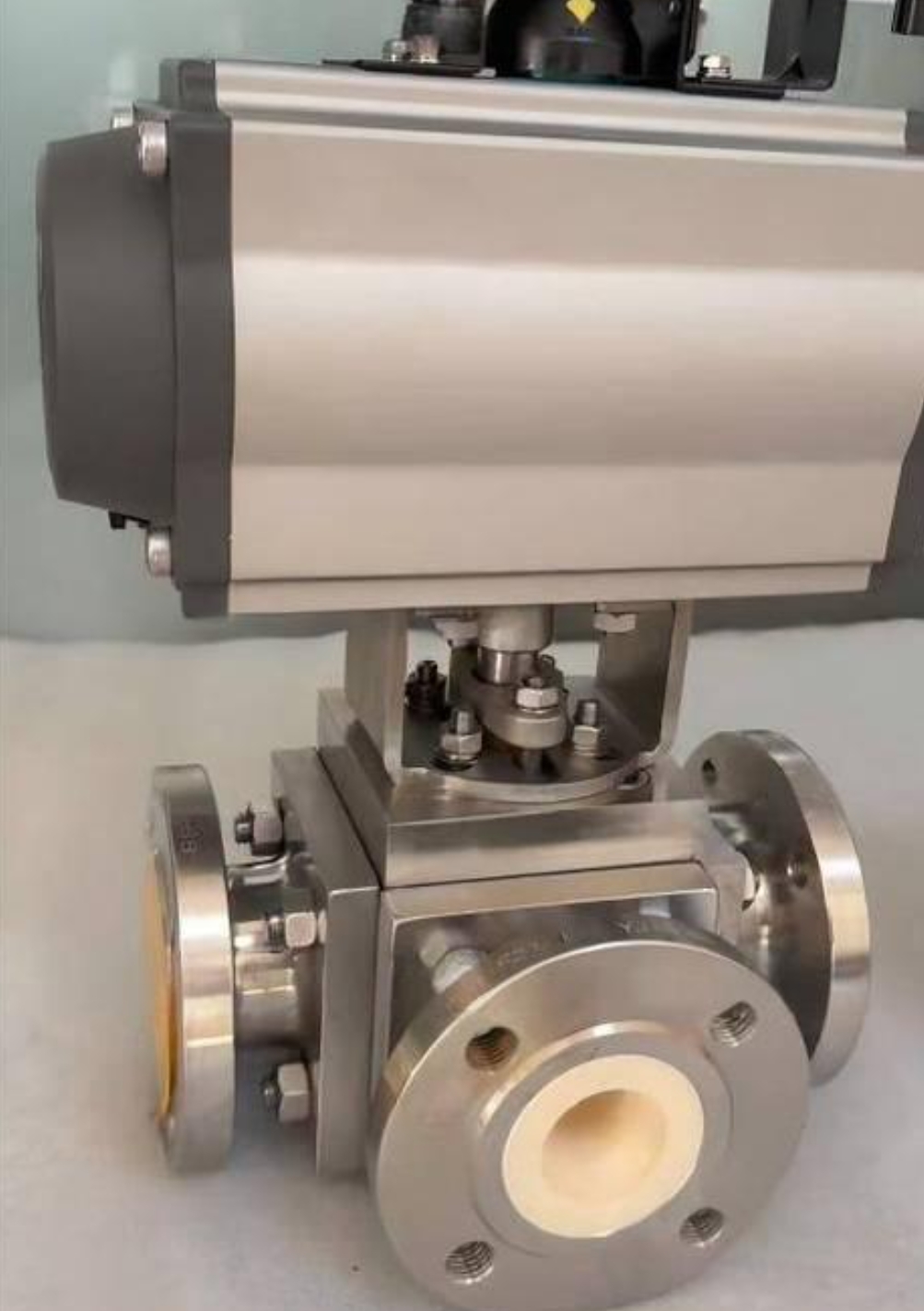
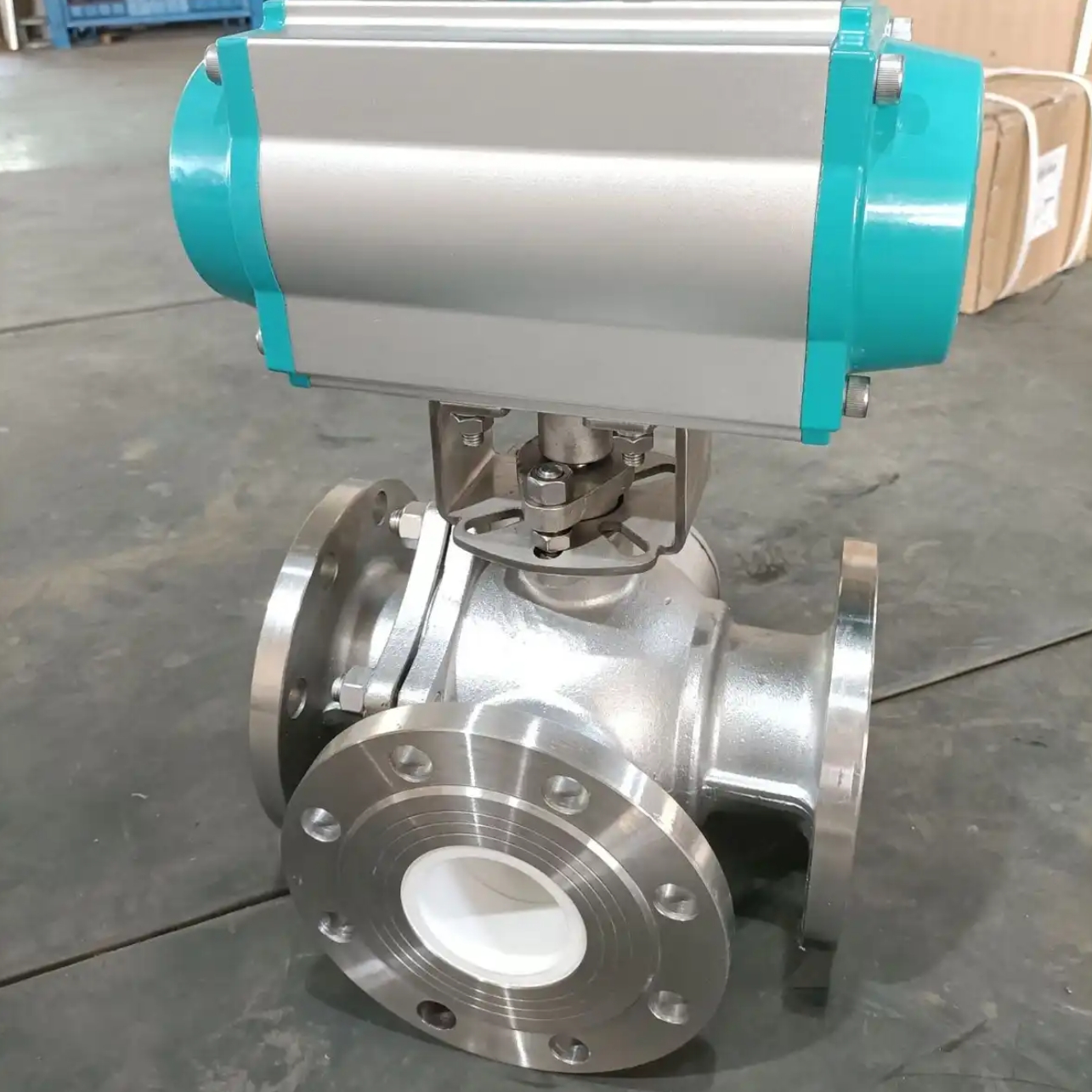
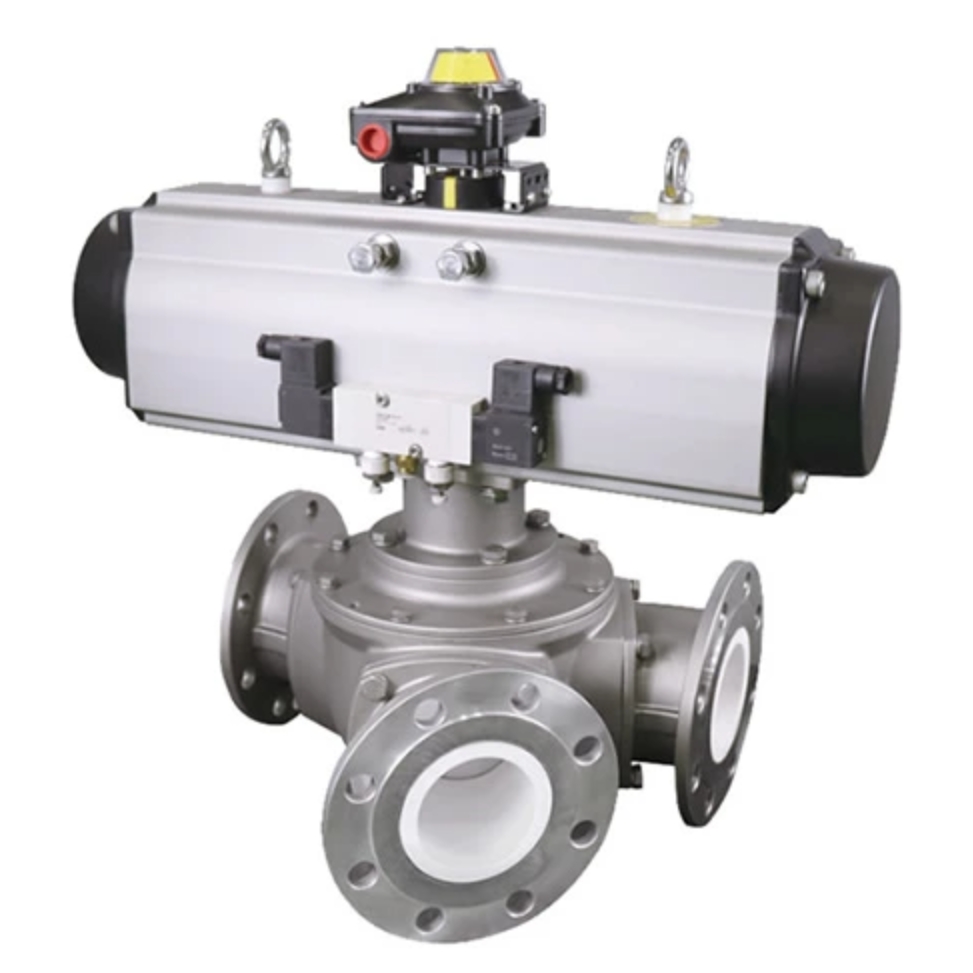
2.3 3-Way Ceramic Ball Valve
Integrated three-port ceramic ball realizes medium diversion, confluence and pipeline reversing, including three subtypes:
-
L-type 3-way ceramic lined ball valve: Only supports two-channel switching without medium mixing, applied to standby pipeline conversion
-
T-type 3-way ceramic ball valve: Connect any two ports or all three ports simultaneously, flexible for flow splitting and mixing
-
Y-type 3-way ceramic ball valve: 120°/135° streamlined flow path without dead corners or medium residue, ultra-low flow resistance for clean and crystallizable slurry
3. Classified by Ceramic Lining Coverage
3.1 Fully Lined Ceramic Ball Valve
All wetted components (ball, valve seat, valve body lining, inner wall of end caps) are made of dense structural ceramics. The metal valve body only bears pressure without contacting corrosive and abrasive media.
-
Application: Severe working conditions with strong acid, strong alkali, high-concentration mineral slurry, power plant desulfurization gypsum slurry
3.2 Semi-Lined Ceramic Ball Valve
Only core friction sealing parts (ceramic ball + ceramic seats) adopt ceramic materials, while the inner valve body remains metal.
-
Advantages: Lower procurement cost, light weight, simple maintenance
-
Application: Working conditions with medium abrasion, weak corrosion and low particle clean media
4. Classified by Ceramic Trim Material
4.1 Alumina Ceramic Ball Valve (Al₂O₃)
Universal wear-resistant material in the industry with hardness above HRC90 and outstanding abrasion resistance.
-
95% alumina: General working conditions such as mineral slurry, wastewater and conventional acid-alkali pipelines
-
99.7% high-purity alumina: Higher compactness and superior acid resistance for fine chemical and food-grade clean media
4.2 Zirconia Toughened Ceramic Ball Valve (ZrO₂)
Much higher toughness than alumina ceramic with excellent impact and crack resistance, solving the brittleness defect of ordinary ceramics.
4.3 Silicon Carbide Ceramic Ball Valve (SiC)
Top-tier corrosion resistance, resistant to hydrofluoric acid, strong oxidizing acid and molten salt, with excellent high-temperature oxidation resistance.
5. Classified by Valve Body Split Structure
5.1 Two-Piece Ceramic Lined Ball Valve
Composed of front and rear bodies fastened by flange bolts, standard universal structure.
5.2 Three-Piece Ceramic Ball Valve
Consists of two end connecting sections and a central main body fixed by through bolts.
6. Classified by Actuator & Operation Mode
6.1 Manual Ceramic Lined Ball Valve
Equipped with straight handle or worm gear reducer for on-site manual operation, low cost, suitable for auxiliary pipelines with infrequent switching.
6.2 Pneumatic Ceramic Lined Ball Valve
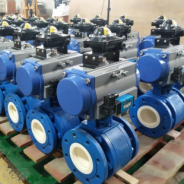
Matched with single/double-acting pneumatic actuator, fast switching speed and full explosion-proof grade without electric spark risk. It can be fitted with solenoid valves and positioners for shut-off or proportional regulation.
6.3 Electric Ceramic Lined Ball Valve
Equipped with electric actuator with position feedback signal, connectable to PLC system for remote unattended intelligent regulation. Stable output torque free from air source pressure fluctuation.
6.4 Custom Special Drive Types
Hydraulic ceramic ball valves for ultra-high pressure heavy-duty pipelines; intelligent electro-pneumatic integrated regulating ceramic ball valves for high-precision process control
7. Classified by Pipeline End Connection
-
Flange End Ceramic Lined Ball Valve: Comply with GB, ANSI, JIS standards, widely used for industrial main pipelines above DN50
-
Threaded End Ceramic Lined Ball Valve: NPT/G internal & external threads, for small-bore DN15~DN50 light-load auxiliary pipelines
-
Butt-Weld End Ceramic Lined Ball Valve: Suitable for high-temperature and high-pressure seamless process pipelines
-
Wafer Type Ceramic Ball Valve: Clamped between two pipeline flanges, compact for limited installation space
Ceramic lined ball valve application
Ceramic lined ball valve is mainly used in thermal power plant, steel, petroleum, chemical, paper, biological engineering, and other industries.Suitable for boiler steam, lime slurry, seawater transportation containing particles, high hardness particles, soft particles with corrosive media, powder, flue gas desulfurization, ash, slag discharge, water treatment.Change the material according to the purpose, ceramic ball valve can be used in different temperature and medium.
Ceramic liend ball valve application Field:
1. Power plant flue gas desulfurization denitrification limestone water, limestone slurry, gypsum slurry
2. Ash removal from thermal power plants
3. Conveying of polysilicon powder
4. Conveying of metallurgical powder
5. Hydrometallurgical sulfuric acid and ore mixture
6. Other conditions with high corrosion, high wear and high scour
Ceramic lined ball valve Installation, Operation and Maintenance Guidelines
1 Ceramic lined ball valve Installation Specifications
Clean impurities and welding slag inside the pipeline before installation to prevent hard particles from scratching the ceramic sealing surface. The valve can be installed horizontally or vertically at any angle, and the medium flow direction must match the marking direction on the valve body. Avoid strong knocking and prying of the valve body during installation to prevent damage to internal ceramic parts. Evenly tighten flange bolts to ensure uniform fitting of the sealing surface without offset pressure and leakage.
2 Ceramic lined ball valve Operation Requirements
Open and close the valve gently to avoid rapid sudden opening and closing, reducing instantaneous medium impact on the ceramic sealing surface. Do not operate beyond the rated pressure, temperature and working conditions to prevent component damage. For pipelines with large particle impurities, it is recommended to install supporting filter devices to further extend the service life of the valve.
3 Ceramic lined ball valve Daily Maintenance
Ceramic ball valve require no frequent maintenance. Daily inspection only needs to check the sealing state of the valve body and the operating state of the driving mechanism. Before restarting after long-term shutdown, perform no-load opening and closing several times to clean slight internal dust and residual impurities. Slight jamming can be eliminated by gentle opening/closing and medium flushing without disassembly. Private disassembly of ceramic sealing components is prohibited to avoid damage to the precision grinding surface and attenuation of sealing performance. The overall maintenance is simple with extremely low labor cost, suitable for long-term continuous industrial operation scenarios.
-
- Port size:1/2"~12" (DN15~DN300)
- Pressure:PN10-PN40 CL150-CL300
- Structure:Segmented V type ball
- Medium:Particles,dust,fiber and others
- Temperature :-20~300℃
- Body material:WCB,CF8,CF8M,CF3,CF3M etc.
-
- Port size:1/2"~8" (DN15~DN200)
- Pressure:PN10-PN16 CL150
- Structure:V port ball or O port ball
- Medium:Particles,dust,fiber and others
- Temperature :-20~300℃
- Body material:WCB,CF8,CF8M,CF3,CF3M etc.
-
- Port size:1/2"~12" (DN15~DN300)
- Pressure:PN10-PN16 CL150
- Structure:V port ball or O port ball
- Medium:Particles,dust,fiber and others
- Temperature :-20 ~ 300℃
- Body material:WCB,CF8,CF8M,CF3,CF3M etc.
-
- Port size:1/2"~12" (DN15~DN300)
- Pressure:PN10-PN16 CL150
- Structure:Full port or V port
- Medium:Particles,dust,fiber and others
- Temperature :-20 ~ 300℃
- Body material:WCB,CF8,CF8M,CF3,CF3M etc.
-
- Port size:1/2"~24" (DN15~DN600)
- Pressure:PN10-PN40 CL150-CL300
- Structure:V port ball or O port ball
- Medium:high hardness particles
- Temperature :-40~300℃
- Body material:WCB,CF8,CF8M,CF3,CF3M etc.
-
- Port size:1/2"~24" (DN15~DN600)
- Pressure:PN10-PN40 CL150-CL300
- Structure:V port ball
- Medium:high hardness particles
- Temperature :-40~300℃
- Body material:WCB,CF8,CF8M,CF3,CF3M etc.
-
- Port size:DN50~300, NPS 2〞~ 12〞
- Pressure:PN10 ~ 40 CLASS 150/300LB
- Structure:Full ceramic lined
- Medium:Dust,slag,particle,fiber,ect.
- Temperature :-20~300℃
- Body material:WCB CF8 CF3 CF8M CF3M or others
-
- Port size:DN50~300, NPS 2〞~ 12〞
- Pressure:PN16 ~ 40 CLASS 150/300LB
- Structure:Full ceramic lined
- Medium:Dust,slag,particle,fiber,ect.
- Temperature :-20~300℃
- Body material:WCB CF8 CF3 CF8M CF3M or others
-
- Port size:DN50~300, NPS 2〞~ 12〞
- Pressure:PN16 ~ 40 CLASS 150/300LB
- Structure:Full ceramic lined
- Medium:Dust,slag,particle,fiber,ect.
- Temperature :-20~300℃
- Body material:WCB CF8 CF3 CF8M CF3M or others
-
- Port size:DN50~300, NPS 2〞~ 12〞
- Pressure:PN16 ~ 40 CLASS 150/300LB
- Structure:Full ceramic lined
- Medium:particle,slag,ash, fiber or others
- Temperature :-20~300℃
- Body material:WCB CF8 CF3 CF8M CF3M or others
-
- Port size:DN50~300, NPS 2〞~ 12〞
- Pressure:PN16 ~ 40 CLASS 150/300LB
- Structure:Full ceramic lined
- Medium:particle,slag,ash,fiber or others
- Temperature :-20~300℃
- Body material:WCB CF8 CF3 CF8M CF3M or others
-
- Port size:DN50~300, NPS 2〞~ 12〞
- Pressure:PN16 ~ 40 CLASS 150/300LB
- Structure:Full ceramic lined
- Medium:particle,slag,ash, fiber or others
- Temperature :-20~300℃
- Body material:WCB CF8 CF3 CF8M CF3M or others
-
- Port size:DN50~300, NPS 2〞~ 12〞
- Pressure:PN16 ~ 40 CLASS 150/300LB
- Structure:Full ceramic lined,V port
- Medium:particle,slag,ash,fiber or others
- Temperature :-20~300℃
- Body material:WCB CF8 CF3 CF8M CF3M or others
-
- Port size:DN50~300, NPS 2〞~ 12〞
- Pressure:PN16 ~ 40 CLASS 150/300LB
- Structure:Full ceramic lined
- Medium:Powder,partical,ash,slag or others
- Temperature :-20~300℃
- Body material:WCB CF8 CF3 CF8M CF3M or others
-
- Port size:2'' ~ 12''( 50mm ~ 300mm)
- Pressure:PN16 ~ 40 CLASS 150/300LB
- Structure:Full ceramic lined
- Medium:Dust,slag,particle,fiber,ect.
- Temperature :-20~300℃
- Body material:CF8 CF3 CF8M CF3M or others
-
- Port size:1/2'' ~ 8''( 15mm ~ 200mm)
- Pressure:PN16 ~ 40 CLASS 150/300LB
- Structure:Full ceramic lined
- Medium:Dust,slag,particle,fiber,ect.
- Temperature :-20~300℃
- Body material:WCB CF8 CF3 CF8M CF3M or others
-
- Port size:DN50~300, NPS 2〞~ 12〞
- Pressure:PN16 ~ 40 CLASS 150/300LB
- Structure:3PC,Full bore/Reduced bore
- Medium:Water,oil,steam,gas
- Temperature :-20~300℃
- Body material:WCB CF8 CF3 CF8M CF3M or others
-
- Port size:2'' ~ 12''( 50mm ~ 300mm)
- Pressure:PN16 ~ 40 CLASS 150/300LB
- Structure:3PC,Full bore
- Medium:particle,slag,ash, fiber or others
- Temperature :-20~300℃
- Body material:WCB CF8 CF3 CF8M CF3M or others
-
- Port size:2'' ~ 12''( 50mm ~ 300mm)
- Pressure:PN16 ~ 40 CLASS 150/300LB
- Structure:Trunion mounted,3PC
- Medium:particle,slag,ash, fiber or others
- Temperature :-20~300℃
- Body material:WCB CF8 CF3 CF8M CF3M or others
-
- Port size:1/2'' ~ 8''( 15mm ~ 200mm)
- Pressure:PN10 ~ PN16、 CLASS 150LB
- Structure:3PC,Full bore,ceramic lined
- Medium:Powder,partical,ash,slag or others
- Temperature :-20~300℃
- Body material:CF8 CF3 CF8M CF3M or others
-
- Port size:1/2'' ~ 8''( 15mm ~ 200mm)
- Pressure:PN10 ~ 40 CLASS 150/300LB
- Structure:Full ceramic lined
- Medium:particle,slag,ash, fiber or others
- Temperature :-20~300℃
- Body material:WCB CF8 CF3 CF8M CF3M or others
-
- Port size:1/2'' ~ 8''( 15mm ~ 200mm)
- Pressure:PN16 ~ 40 CLASS 150/300LB
- Structure:Full ceramic lined
- Medium:particle,slag,ash,fiber or others
- Temperature :-20~300℃
- Body material:WCB CF8 CF3 CF8M CF3M or others
-
- Port size:DN15~200, NPS 1/2〞~ 8〞
- Pressure:PN16 ~ 40 CLASS 150/300LB
- Structure:Full ceramic lined
- Medium:particle,slag,ash,fiber or others
- Temperature :-20~300℃
- Body material:WCB CF8 CF3 CF8M CF3M or others
-
- Port size:DN15~200, NPS 1/2〞~ 8〞
- Pressure:PN10 ~ 40 CLASS 150/300LB
- Structure:Full ceramic lined
- Medium:particle,slag,ash, fiber or others
- Temperature :-20~300℃
- Body material:WCB CF8 CF3 CF8M CF3M or others
 info@shxvalve.com