China Ball valve manufacturer,factory and supplier-Ball valve
 info@shxvalve.com info@shxvalve.com

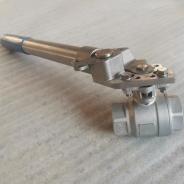
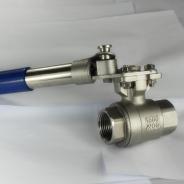
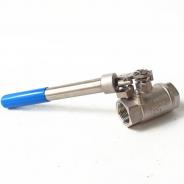
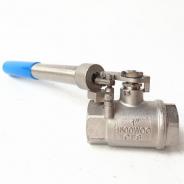
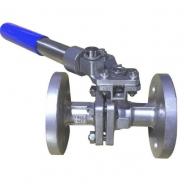
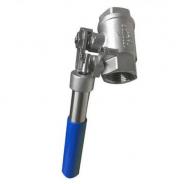
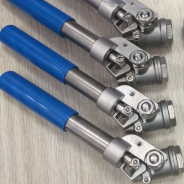
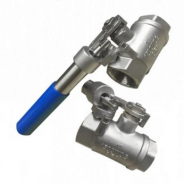
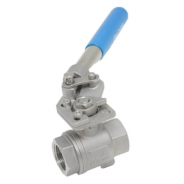
A spring return ball valve is also called spring return lever ball valve, which is a manually operated safety-type quarter-turn ball valve integrated with a built-in mechanical spring reset mechanism. Unlike standard manual lever ball valves that remain fixed at the opened or closed position after manual operation, this specialized valve is designed with a tension or compression spring assembly inside the lever handle structure. It requires manual force to hold the valve open or closed and automatically returns to its default safe position once the operating force is released. As a cost-effective mechanical fail-safe valve without pneumatic or electric actuation, it fills the gap between ordinary manual valves and automated spring return valves, providing reliable passive safety protection for small-bore pipelines, auxiliary process lines, and safety standby systems.
The spring return ball valve strictly follows quarter-turn ball valve working principles, retaining the original advantages of low flow resistance, high flow capacity, compact structure, and bubble-tight sealing. Its core differentiation lies in the mechanical spring reset function, which eliminates human operational negligence risks such as long-term abnormal opening or accidental half-open states. Widely adopted in industrial systems that require temporary manual operation and automatic reset protection, it is extensively used in equipment sampling pipelines, pressure test lines, auxiliary flushing pipelines, and emergency venting systems across machinery, chemical, petroleum, water treatment, and general industrial fields.
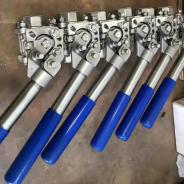
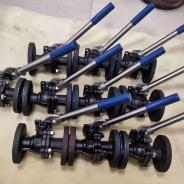
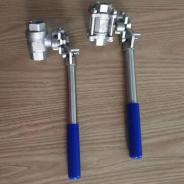
Spring return ball valve is automatic reset, automatic return, two-piece structure, thread and flange connection.Spring return handle ball valve spring automatically returns to open and close only needs to rotate 90 degrees operation and the small rotation moment can connect the medium circulation. Spring return ball valve is suitable for chemical industry, petroleum, electric power, pharmacy, beer, food, dairy beverage, cosmetics and engineering pipeline and other fields.
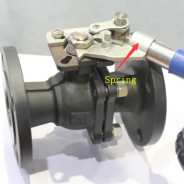
Spring return ball valve is the main research and development of products, the characteristics of the ball valve is in the spring on the handle, in the spring of the handle into consideration to the long-term use can lead to the present situation of the spring is stretched or pull dead, in the interior design for spring adjustable tension and firmness, and the use after a period of time, which can spin down the lever, the internal nut tighten, (such as the need to slowly close to loosen the nut, let a lighter spring, to the effect of slow closing) the design of spring return ball valve is the traditional insurmountable.Spring return handle ball valve in access, tank bottom, the use of mechanical equipment is very wide, compared with the traditional two-piece ball valve, not only can save trouble and effort, in some equipment can also prevent the loss of fluid caused by forgetting to close the valve.
The spring return lever ball valve is a practical and cost-effective safety protection valve tailored for manual temporary operation scenarios. It perfectly combines the simple operation of manual ball valves and the passive safety reset function of spring return valves, making up for the safety loopholes of ordinary manual valves that rely entirely on human control. With full mechanical drive, zero external power consumption, low maintenance cost, and flexible functional switching, it provides reliable and economical safety protection for various small-bore auxiliary pipelines and temporary operation systems, occupying an irreplaceable position in general industrial fluid control and safety auxiliary systems.
| Product Name | Spring return ball valve |
| 1. Material | SS304/316/304L/316L ( CF8/CF8M/CF3/CF3M), WCB, etc. |
| 2. Size | 1/2~4 inch ( DN15~DN100) |
| 3. Port | Full Port |
| 4. Working Pressure | PN10-PN100 CL150-CL600 |
| 5. Connection Ends | Flange,SW,thread,clamp |
| 6. Working Temp. | -20~150ºC, or according to customer requirements for different industry. |
| 7. Suitable Medium | Water, Natural Gas, Oil and some corrosive liquid |
| 8. Operation | Handle operated, Locking device is option |
| 9. Inspection & Testing | According to API598 |
1. Spring Return Closes the valve when not held open.
2. Spring Return Handles are manufactured from heavy duty stainless steel components to withstand frequent use in refueling, sampling, drains and other applications that require positive closure of a manual valve.
3. The Spring is enclosed within the tubular handle of the valve thus preventing possible finger trap hazards.
4. Spring Return Ball Valve utilizes live loaded packing, which provides longer periods between packing adjustment and maintenance, reducing the need for valve maintenance.
5. Providing safe operation for both general and industrial chemical applications.
6. Ball Valve with Spring Return Handle has a locking device as standard to lock the valve in the preferred position.
7. Spring returen ball valve with a direct mounting pad that allows the Fail Close
8. Spring Handle or “Dead Man Handle” to be fitted.
9. Spring return ball valve is usually used when the application requires a reliable positive fail close operation when user disengages the lever.
10. Operating torque approximately three times standard valve torque.
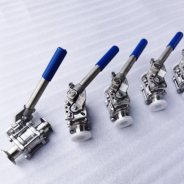
11. Spring Return Ball Valve available from 1/4” to 4” Thread, Socket Weld, Sanitary Tri-clamp or Flanged Ball Valve and other End Connections.
12. Torque range available up to 100 N.M., valve ensures tight shut off and is versatile for wide range of flowing media.
The spring return lever ball valve features a highly integrated and simplified mechanical structure, consisting of a standard ball valve body, precision internal sealing assembly, anti-blowout valve stem, and customized spring return lever operating mechanism. All components are optimized for manual operation comfort, reset sensitivity, and long-term structural stability, with no complex electrical or pneumatic accessories required.
Spring Return Lever Mechanism (Core Component): The exclusive functional structure distinguishing it from ordinary manual ball valves. The heavy-duty lever handle is equipped with built-in high-strength stainless steel springs, limit positioning pins, and reset guide grooves. The spring assembly is pre-tensioned during factory assembly to ensure stable elastic force and consistent reset stroke. When the operator manually swings the lever to open or adjust the valve, the spring stores elastic energy; once the hand releases the lever, the spring releases energy instantly to drive the lever and valve stem back to the preset safe position automatically.
Valve Body & Flow Passage Structure: Most products adopt a two-piece integrated valve body structure, with optional full-port and reduced-port designs. Full-port types deliver ultra-low pressure loss and unobstructed fluid flow, suitable for main pipeline circulation; reduced-port types feature higher structural rigidity and stronger pressure resistance, ideal for small-bore auxiliary pipelines. Conventional body materials include WCB carbon steel, SS304, and SS316 stainless steel, adapting to water, oil, gas, and weakly corrosive industrial media.
Ball Core & Sealing System: Equipped with precision-machined spherical ball cores with smooth flow channels to avoid medium deposition and fluid turbulence. The sealing system is divided into soft seal and hard seal types: PTFE, RPTFE, and PEEK soft seals achieve zero bubble leakage for clean media at normal and medium temperatures; Stellite alloy hard seals adapt to high-temperature, high-pressure, and slightly abrasive media, ensuring durable sealing performance after repeated reset operations.
Anti-Blowout Valve Stem & Reinforced Packing: Adopts one-piece forged valve stem with anti-blowout limiting structure, effectively preventing stem ejection under full pipeline working pressure. Multi-layer compression packing is installed at the stem joint to eliminate external leakage. The stem and lever connection adopts a spline or flat-square positioning structure to avoid slipping during frequent manual swinging and spring reset, ensuring synchronous and accurate rotation of the ball core.
Position Lock & Limit Device: Standard industrial-grade spring return lever ball valves are equipped with mechanical limit structures to control the 90-degree opening and closing stroke, preventing over-rotation damage. Individual models support temporary locking function, allowing long-term fixed operation when reset protection is not required, realizing dual functions of temporary fixed switch and automatic spring reset.
The reset principle of spring return ball valve is to add a spring at the handle. Taking the lever unilateral spring as the actual principle, the spring presses the handle when the handle is opened, and the spring pushes the handle to close when the handle is released. Its function is based on the principle of automatic spring rebound and reset.Spring return handle ball valve is made of CF8 CF8M or other material and made of superior spring combination, with a service life of up to one million times or three years.Spring return handle ball valve is widely used in petroleum, chemical industry, light industry, food, medicine, environmental protection and other industries.
The working logic of the spring return lever ball valve is based on manual force drive and mechanical spring automatic reset, realizing human intervention operation and passive safety reset without external power sources. In the factory default state, the valve stays at the preset safe position, which is generally fully closed for most safety-type models, and customized fully open types are available for special circulation protection working conditions.
During normal temporary operation, the operator applies manual torque to swing the lever handle 90 degrees, driving the valve stem and internal ball core to rotate synchronously. The valve channel is opened to realize medium circulation, sampling, pressure relief, or flushing. During the lever swinging process, the built-in spring is compressed or stretched to store elastic potential energy. As long as continuous manual holding force is maintained, the valve can keep the open state stably to complete short-term pipeline operation.
Once the operator releases the lever handle, the external operating force disappears instantly. The spring releases the stored elastic potential energy rapidly and drives the lever mechanism to reset reversely, pulling the ball core back to the initial safe position within milliseconds to cut off or restore pipeline flow. The whole reset process relies purely on mechanical force, unaffected by power failure, air source failure, and signal failure, achieving 100% reliable passive safety protection. This mechanism effectively avoids safety hazards caused by forgotten closing, accidental opening, or incomplete valve reset after manual pipeline operation.
1. Classification by Fail-Safe Mode
Spring Return Fail-Closed Ball Valve: The most mainstream type. Default state is fully closed; manual force opens the valve, and automatic reset closes the valve after release. Widely used in sampling pipelines, test pipelines, and temporary medium delivery pipelines to prevent long-term leakage.
Spring Return Fail-Open Ball Valve: Default state is fully open; manual force closes the valve, and automatic reset opens the valve after release. Mainly used in cooling protection pipelines, circulation guarantee pipelines, and pressure relief standby pipelines to avoid pipeline blockage and overpressure.
2 Classification by Sealing Type
Soft-Seal Spring Return Ball Valve: Adopts polymer sealing materials, achieving zero leakage, low operating torque, and flexible reset. Suitable for normal-temperature clean water, gas, oil, and other non-abrasive media, with high cost performance.
Hard-Seal Spring Return Ball Valve: Adopts metal alloy hard sealing pairs, resistant to high temperature, high pressure, abrasion, and weak corrosion. Suitable for steam, high-temperature oil, and micro-granular medium working conditions.
Select fail-closed type for sampling, temporary delivery, and hazardous medium pipelines to realize automatic cut-off protection;
Choose soft-seal type for clean normal-temperature media and hard-seal type for high-temperature, high-pressure, and abrasive media;
Match valve caliber, pressure grade, and connection mode according to actual pipeline parameters to ensure safe and stable operation.
BQ41F BQ41PPL Jacketed Ball Valve
BQ41H BQ41Y Jacketed ball valve
Pneumatic ceramic lined Y type ball valve
3 Way ceramic lined Y type ball valve
Y type 135 degree ceramic lined ball valve
Y pattern 120 degree ball valve
Y pattern 135 degree ball valve
SHANGHAI HUIXUAN VALVE
Mobile:+86-17717520739
Wechat:17717520739
Email:info@shxvalve.com
Address: NO.720, Suide Road, Jiading District,Shanghai, China.



 微信扫一扫 添加我为好友了解更多  |